
Teaching Children Compound Interest Through Storytelling and Exciting Activities

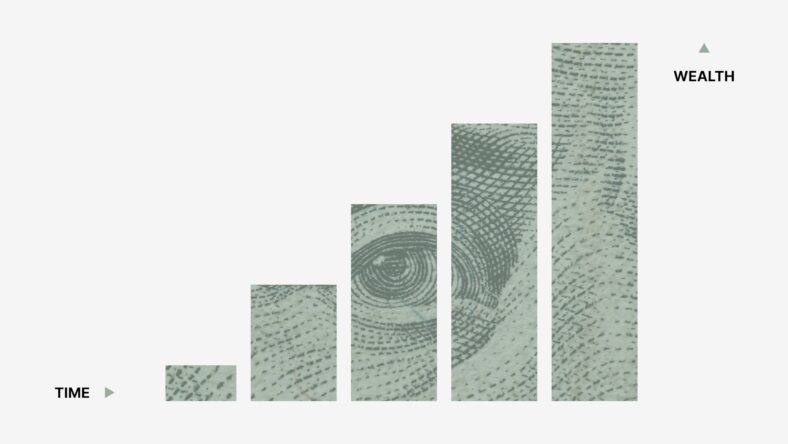
Parents often instill in their children that hard work will turn into success, but there’s another way to ensure a positive future down the line: working smart. While this lesson is definitely applicable to school or hobbies, it also translates well when it comes to managing money.
The real financial magic lies in learning how to make your money work for you through the power of compound interest. Learn more below.
Related: Five-Step Framework Helps Middle-Income Households Turn Cash Flow into Investment Capital
Teaching Through Storytelling
An entralling way to teach the concept of compound interest to children is through storytelling, which is shown through a great example featured on Blue Tree Savings.
Titled “Flash Finn and the Robot Competition,” the story centers on two kids competing to build robots. Flash Finn works hard building robots one by one, aiming for immediate results. However, Bella takes a different approach, building a robot that can build other robots, exponentially increasing her output. Finn’s numbers may grow linearly, but Bella’s multiply, demonstrating the power of compounding.
The story not only simplifies the meaning of compounding, but it also connects to real-world lessons about money and compound interest. Similar to Bella’s robots, money can grow not just from what you earn but from accumulated earnings working for you. By teaching kids this lesson early on, parents can give them a financial advantage over time.
Blue Tree Savings notes that the sooner kids learn that saving regularly, letting money grow, and practicing patience lead to wealth, they will be better suited for establishing financial security as adults.
Imparting Financial Lessons Early

Experts in finances emphasize the importance of teaching these lessons early, especially in today’s society, which is dominated by cashless payments, and where traditional money management skills are being overlooked.
Sheila Bair, former chair of the FDIC and author of several financial literacy children’s books, notes the importance of blending fun stories with clear financial lessons to help children and their parents understand ideas like saving, debt, and compounding.
Keeping financial education simple yet practical is extremely important, especially with current challenges such as crypto volatility and “buy-now-pay-later” schemes.
Check Out: Important Steps to Escape Paycheck to Paycheck Living and Go on the Offense
Activities for Compound Interest
Stories aren’t the only way to teach compound interest to your children. Educators and financial advisers recommend practial and enjoyable activities too.
For younger kids, this might be shaped as using allowances plus a small “interest” amount added weekly, turning saving into an interactive game. For older kids, introducing real compound rates and visual tools like charts and calculators makes the concept tangible, showcasing how small, consistent savings can grow over time.
For those who enjoy technology, there are also interactive apps to further reinforce the importance of compound interest as it relates to savings.
Using Relatable Metaphors and Stories
Another effective strategy that follows a similar pattern to the robot story above, is using relatable metaphors and storiees to capture the imagination while still teaching financial lessons.
Some examples may be a magical money tree or comparing interest to a snowball rolling down a hill. Videos explaining how a small initial deposit can get larger over the years also helps children visualize the growth concretely.
Also Read: Teach Wealth Transfer as a Multi-Year Education Program with These Tips to Pass Wealth Responsibly
The Bottom Line

In conclusion, teaching kids about compound interest is about more than math or finance; its about empowering them with a new mindset that appreciates patience, smart decisions, and long-term thinking. Whether this may be through robot-building stories, saving games, or interactive apps, the end goal is to set children up on a path to prosperity.
Hard work is definitely important, but the true key to lasting success is working smarter by harnessing the power of compound interest. By weaving these life lessons into fun games, parents and educators can give children an advantage on their future.